 The BMT Guarantee
 Residential case study
 Commercial case study



Newsletter
When weather resilient home design meets smart depreciation planning
In the first half of 2025, a series of major flood, cyclone and storm events generated more than $1.8 billion in insured losses across Australia, according to the Insurance Council of Australia. Storm and flood claims lodged between January and May alone exceeded the total claims recorded for all of 2024.
For residential property investors, the financial impact of these events extends well beyond rising insurance premiums. Severe weather can disrupt rental income and has important implications for how repairs, replacements and write-offs are treated for tax depreciation purposes.
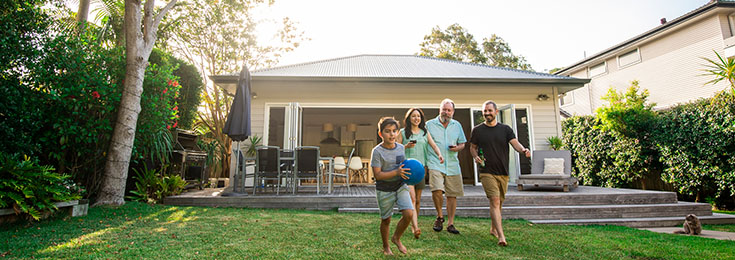
Weather events and building resilience in Australian homes
Extreme weather events tend to cause predictable patterns of damage in residential properties.
Flooding, whether from rivers, flash flooding or surface water, typically affects lower levels first. Common damage includes wall linings, floor finishes, joinery and other items such as wiring, hot water systems and air-conditioning units. Once water enters wall cavities or subfloors, drying times increase significantly, driving up repair costs.
Cyclones and ex-tropical systems place sustained pressure on roofs and building openings. Damage often begins with roof sheets, fixings and tie-downs before spreading to garage doors, windows and external doors. Once the building envelope is breached, internal water damage can escalate rapidly.
Severe storms, characterised by hail, strong winds and heavy rainfall, frequently damage roofs, skylights and gutters, allowing water to penetrate ceilings and walls. Across all weather events, failure of the building shell typically results in the most significant insurance claims, as internal finishes, electrical wiring, sewerage and water supply are far more expensive to repair than external elements alone.
Building resilience through layered protection
Effective weather resilience is best achieved through a layered approach, starting at the site, continuing through the building shell and extending into the interior of the home.
At a site-level, measures such as grading ground away from slabs, permeable paving, rain gardens and improved stormwater management can help slow and divert water during heavy rainfall. Non-return valves can reduce sewer backflow risk, while well-planned landscaping can limit heat and bushfire exposure.
The building shell provides the primary defence against weather entry. Stronger roof fixings, reinforced garage doors, improved seals, well-designed gutters, and gutter leaf guards, all reduce the likelihood of considerable damage during severe events.
Internal measures then limit damage if external defences are breached. Raising electrical wiring, sewerage and water supply above known flood levels and improving moisture control helps protect high-value assets and reduces repair time. When property owners fund these works, they are treated as capital improvements and may form part of the property's depreciable asset base.
Capital works before events and repairs after
Weather-resilient upgrades completed before a weather event are generally treated as capital works (Division 43). When funded by the property investor, these improvements are included in a tax depreciation schedule and claimed over time.
Repairs undertaken after a weather event are usually funded by insurance and are intended to restore the property to its pre-damage condition rather than improve it. Where an insurer pays directly for repairs, the owner has not incurred the cost and therefore cannot claim deductions on those works. Instead, deductions continue on the original assets.
If an owner receives an insurance payout and chooses to undertake capital works improvements, division 43 deductions can be claimed on the new assets from that point forward. However, consideration is required as to whether a capital gain arises on the destroyed asset and whether rollover relief is available to defer capital gains tax by reducing the cost base of the replaced asset.
Where improvements exceed the scope of insurance-funded repairs, the owner-funded portion is included in the depreciation schedule.
Depreciation, insurance and asset write-offs
Severe weather events can also trigger plant and equipment (Division 40) asset write offs for removable or mechanical items such as hot water systems and appliances. When these assets are destroyed and scrapped, any remaining undepreciated value may be claimed in the year of loss.
Insurance proceeds can affect this outcome. The amount received on a payout relating to a destroyed asset may reduce the deduction or create an assessable amount if the proceeds exceed the written down value. In some cases, the ATO allows this assessable amount to be rolled over into the replacement asset by reducing its opening value.
When rollover relief applies, the cost base of the replacement asset is usually adjusted to align with the written-down value of the original asset. This often results in future depreciation deductions that closely reflect what would have applied had the original asset not been lost.
If the destroyed asset was included in a low-value pool, insurance proceeds reduce the pool balance first, with any excess being assessable or used to reduce the opening value of the replacement asset.
Why a depreciation inspection matters
To ensure depreciation and insurance claims are correctly apportioned and fully ATO-compliant, a site inspection by a depreciation specialist is essential. This identifies all owner-funded weather-resilient upgrades and ensures they are correctly categorised to maximise depreciation deductions.
Having an up-to-date tax depreciation schedule in place before a weather event also supports accurate claiming and helps substantiate deductions when assets are damaged, replaced or written off.
For expert advice on weather-resilient upgrades, insurer-funded repairs or post-event property reviews, contact BMT Tax Deprecation on 1300 268 628 or Request a Quote.