

 The BMT Guarantee
 Residential case study
 Commercial case study


Are townhouses a good investment property opportunity?


First published 21 January 2025


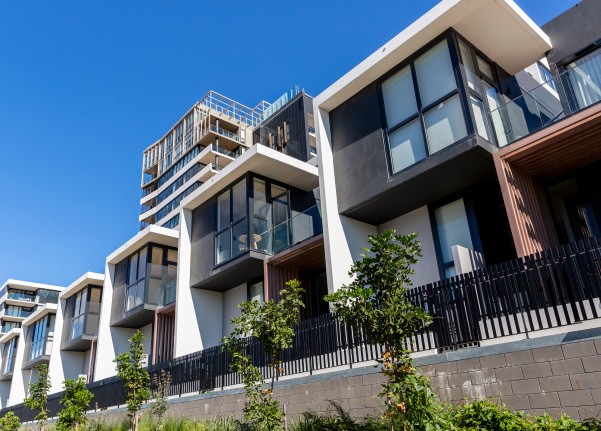
Townhouses are a compelling investment choice for Australian property investors. They offer an affordable, low-maintenance alternative to traditional housing, making them a popular choice for investors. Their appeal lies not only in their affordability and accessibility but also in their alignment with contemporary trends in sustainability and urbanisation.
This article explores the pros and cons of investing in townhouses in Australia, as well as their depreciation potential, providing valuable insights to help guide your decision to the question, are townhouses a good investment?

Key take-out
- Investing in townhouses offers a mix of benefits and challenges
- Townhouses can offer lucrative tax depreciation deductions
- Both new and second-hand townhouses hold depreciation deductions
Are townhouses a good investment?
As with any investment, there are pros and cons to having a townhouse as an investment property.
The pros:
Sustainability
Affordability
High demand
Location advantages
Low maintenance
Strong rental yield
The cons:
Body corporate fees
Limited land ownership
Potential for strata disputes
Resale value uncertainty
Summary
Investing in townhouses offers the benefits of sustainability, affordability, high demand, prime location, low maintenance, and strong rental yields, but may come with challenges like body corporate fees, potential strata disputes and resale value uncertainty.
Tax depreciation on townhouses
Tax depreciation is an important aspect of townhouse investment that should not be overlooked. In Australia, investors can claim depreciation on both the building structure and the fixtures and fittings of a townhouse. This can result in lucrative tax deductions, making the investment more financially attractive.
A capital works deduction, also known as Division 43, can be claimed for the wear and tear that occurs to a building’s structure and items that are permanently fixed to the property. For properties built after 1987, investors can claim the capital works deduction at a rate of 2.5 per cent per annum for up to forty years, which can be a significant amount over the property's life.
In addition to building depreciation, investors can claim depreciation on the plant and equipment, also known as Division 40, within the townhouse. This includes items like appliances, carpets, and hot water systems. These items generally have a shorter effective life and can be depreciated more quickly.
Case study

Ralph buys a new three-bedroom townhouse for $780,000
His property is rented for $550 a week or $28,600 per annum
BMT uncovers $18,400 in depreciation deductions in the first full financial year
New townhouse purchased for $780,000 depreciation breakdown
| New townhouse purchased for $780,000 | Without depreciation | With depreciation |
| Annual rental income | $28,600 | $28,600 |
| Annual property expenses | $32,000 | $32,000 |
| Pre-tax cash flow (income less expenses) | -$3,400 | -$3,400 |
| Depreciation claim | $0 | $18,400 |
| Total taxation loss (pre-tax cash flow + depreciation) | $3,400 | $21,800 |
| Tax refund (tax loss x tax rate of 37%) | $1,258 | $8,066 |
| Annual costs (pre-tax cash flow + tax refund) | $2,142 | $4,666 |
| Weekly cost | -$41 per week | +$90 per week |
| Difference of $131 per week | ||
Disclaimer: The case study estimates shown are based on the diminishing value method of depreciation and are provided as an approximate guide, for example purposes only. BMT Tax Depreciation is not liable for any misinterpretation from these case studies.

Did you know?
It’s not just new townhouses that offer great depreciation deductions. Second-hand townhouses can too – especially if they’ve been renovated.
By incorporating depreciation into their tax planning strategy, townhouse investors can enhance their cash flow and overall return on investment. Depreciation deductions reduce taxable income, resulting in lower tax payments and more money in the investor's pocket.
The bottom line
With careful planning and a strategic approach, investing in townhouses can be a lucrative addition to a property portfolio. Whether you're a seasoned investor or just starting, townhouses offer a unique opportunity to capitalise on Australia's thriving property market.
Upon purchase of your investment property, it is advisable to engage BMT Tax Depreciation to prepare your depreciation schedule. We are qualified quantity surveyors ensuring that all eligible deductions are claimed accurately, allowing you to maximise your depreciation deductions. Call us today on 1300 728 726 or Request a Quote.
Disclaimer: The case study estimates shown are based on the diminishing value method of depreciation and are provided as an approximate guide, for example purposes only. BMT Tax Depreciation is not liable for any misinterpretation from these case studies.
Connect with us
Stay up to date
Subscribe to receive the latest
BMT news and announcements.