

 The BMT Guarantee
 Residential case study
 Commercial case study


Why investing in childcare centres differs from typical commercial property assets


First published 30 March 2026


For investors accustomed to offices, retail or industrial property, investing in childcare centres can appear familiar on the surface. The assets are commercial, leases are often long, and yields can look attractive.
Yet childcare centres operate under a fundamentally different set of drivers. Income security, asset value and long-term performance are shaped less by market rents and more by regulation, operator capability and highly specialised building design.
Applying standard commercial property assumptions to childcare centres can lead to mispricing risk, misunderstanding lease security and underestimating capital reinvestment requirements. Understanding why childcare centres are treated as a specialised or social infrastructure asset is essential before assessing their role in a property portfolio.
- Why childcare centres are treated as specialised assets
- Long leases that hinge on the operator
- Operator reliance risk and tenant quality
- Fit-out intensity and concentrated asset value
- Compliance-driven design and regulatory influence
- Depreciation deductions and long-term returns
- Why due diligence looks different
- The bottom line
Why childcare centres are treated as specialised assets
Childcare centres sit at the intersection of commercial property and regulated social infrastructure. Their purpose is tightly defined, their use is highly specific, and alternative uses are limited without substantial modification.
Unlike offices or warehouses, a childcare building is designed around regulatory ratios for room sizes, outdoor play areas, amenities, accessibility and safety. These requirements shape the building from the ground up and materially affect its adaptability. As a result, the value of a childcare centre is closely linked to its ongoing suitability for childcare use rather than broad market demand for generic commercial space.
This functional specificity is a key reason lenders, valuers and institutional investors often assess childcare centres differently from mainstream commercial assets.
Long leases that hinge on the operator
One of the most cited attractions of investing in childcare centres is the prevalence of long leases, often with initial terms of ten to twenty years and structured rent reviews. On paper, this provides a level of income certainty that is uncommon in other commercial sectors.
However, the strength of the lease cannot be separated from the strength of the operator. Unlike a retail tenant that can relocate with limited disruption, a childcare operator’s business is embedded in the site. Occupancy levels, staffing, compliance history and reputation within the local community all directly influence their ability to meet lease obligations.
For investors, this means lease length alone is not a sufficient proxy for risk. Operator quality, balance sheet strength and operating track record are central to assessing income security.
Operator reliance risk and tenant quality
In a childcare centre, the tenant is not simply renting space; they are running a tightly regulated service business. Revenue depends on enrolments, staffing ratios and compliance with education and care standards. Any disruption in these areas can quickly flow through to rental risk.
This creates a higher degree of operator reliance than in most commercial property classes. A strong operator can underpin stable, long-term income. A weak or inexperienced operator can expose the owner to vacancy risk that is difficult and costly to remedy, given the limited pool of replacement tenants and the specialised nature of the building.
Due diligence therefore extends beyond lease terms into a detailed assessment of the operator’s business model, governance and regulatory history.
Fit-out intensity and concentrated asset value
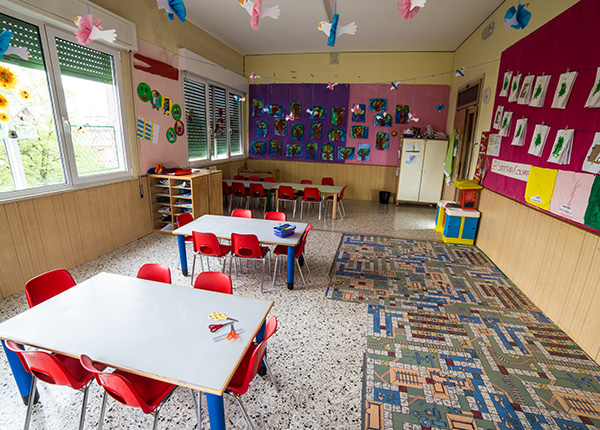
Childcare centres are fit-out intensive. A significant proportion of the building’s functional value sits within specialised internal assets such as joinery, bathroom facilities, kitchen areas, flooring, security systems and outdoor play infrastructure.
These components are purpose-built and often have shorter effective lives than the structural shell. Over time, they require replacement or upgrading to remain compliant and competitive.
In many childcare centres, a substantial portion of deductible depreciation can arise from these internal assets rather than the building structure itself, making accurate identification and classification particularly important for investors.
While depreciation is not the primary driver of an investment decision, it forms part of the broader picture of how quickly value is consumed within the asset and when reinvestment is likely to be required.
Compliance-driven design and regulatory influence
Few commercial assets are as heavily shaped by regulation as childcare centres. Licensing requirements influence everything from room layouts and ceiling heights to plumbing, fire safety systems and outdoor space design.
Regulatory change can therefore have direct capital implications. Updates to standards may trigger refurbishment works, reconfiguration of spaces or replacement of services. These are not discretionary upgrades aimed at improving yield; they are often necessary to maintain the centre’s licence to operate.
Investors need to recognise that regulatory compliance is an ongoing factor in asset management, not a one-off consideration at acquisition.
Depreciation deductions and long-term returns
The combination of specialised fit-outs, compliance-driven upgrades and operator-specific use means childcare centres tend to experience a different pattern of capital consumption compared to standard commercial assets.
For depreciation purposes, much of the value within a childcare centre is not limited to the structural shell of the building. A substantial proportion sits in internal plant and equipment such as:
- Air conditioning
- Bathroom accessories
- Fire and smoke alarm assets
- Ovens
- Furniture
- Security systems
- Floor coverings
- Outdoor play equipment
These assets typically have shorter effective lives than the building structure and are expected to be replaced or upgraded over time.
Depreciation deductions associated with these assets reflect how quickly they are consumed through use and can contribute to improved after-tax cash flow when accurately identified and applied.
In practical terms, this means the internal components of a childcare centre may depreciate more rapidly than the underlying building itself. From an investment analysis perspective, this highlights the importance of understanding where value sits within the asset and planning for future reinvestment cycles.
Understanding the distribution of structural elements, building services and plant and equipment within a childcare centre helps investors assess depreciation outcomes, maintenance costs and long-term capital expenditure.
Specialist depreciation assessments, such as through BMT Tax Depreciation, often identify a greater proportion of plant and equipment within childcare centres than investors initially expect.
Why due diligence looks different
Due diligence when investing in childcare centres goes well beyond zoning, lease terms and comparable yields. It requires an integrated assessment of:
- The operator’s financial and compliance standing
- The suitability and remaining life of specialised fit-outs
- The building’s ability to adapt to regulatory change
- The depth of demand for childcare services in the catchment
This broader lens reflects the reality that childcare centres are not interchangeable commercial boxes. They are operating assets whose performance depends on people, regulation and purpose-built infrastructure.
The bottom line
Investing in childcare centres can deliver long-term income stability, but only when assessed through the correct lens. These assets behave differently to offices, retail and industrial property, with value and performance closely tied to operator quality, regulatory compliance and the condition of highly specialised fit-outs.
For investors, this means due diligence must extend beyond headline yields and lease length. Understanding how capital works, services and internal assets are consumed over time is critical to forming realistic expectations about reinvestment requirements and long-term returns.
Because childcare centres sit at the intersection of commercial property and regulated social infrastructure, specialist input can play an important role in understanding how these assets perform over time.
Depreciation allowances associated with building structure, plant and equipment and specialised fit-outs can materially influence cash flow and after-tax investment returns when accurately identified and applied.
BMT Tax Depreciation has completed depreciation schedules for hundreds of childcare centres across Australia. Working with investors and accountants, BMT provides clear, compliant insight into how childcare centre assets are structured, where value sits within the property and how those components depreciate over their effective lives.
To discuss a childcare centre asset or request a tailored assessment, contact BMT Tax Depreciation on 1300 728 726 or Request a Quote.
Connect with us
Stay up to date
Subscribe to receive the latest
BMT news and announcements.