

 The BMT Guarantee
 Residential case study
 Commercial case study


Understanding depreciation for mining equipment


First published 30 March 2026


Depreciation for mining equipment is rarely straightforward. Unlike standard commercial or industrial assets, mining plant is typically large-scale, purpose-built and exposed to operating conditions that accelerate wear and obsolescence. Yet depreciation is often approached using generic assumptions that fail to reflect how mining assets are actually constructed, installed, used and therefore how they should be claimed for depreciation purposes.
Under Australian tax law, depreciation outcomes for mining equipment depend on classification, asset function and real-world use. Getting this wrong can materially distort deductions over the life of a project and create compliance risk that may not surface until years later.
This article examines how depreciation applies to mining equipment in practice, and why mining assets require a more considered, site-specific approach than most other asset classes.
- Why depreciation is more complex for mining equipment
- What qualifies as mining equipment for depreciation purposes
- Capital works vs plant and equipment in mining
- Asset use, commissioning and operational realities
- Common issues seen in mining depreciation claims
- Why site-specific assessment matters in mining
- Case study: depreciation outcomes for a mining operation
- The bottom line
Why depreciation is more complex for mining equipment
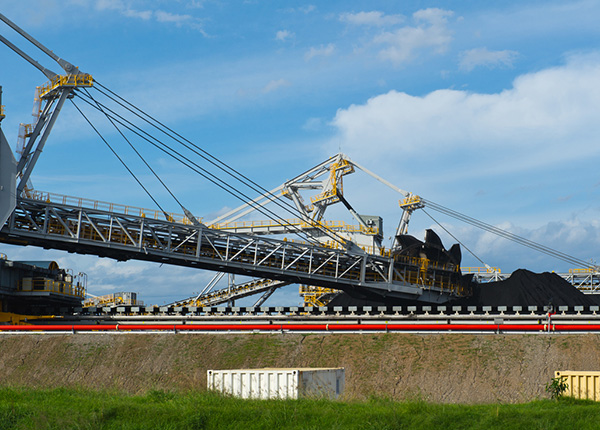
Mining operations combine mobile plant, fixed processing infrastructure and purpose-built installations that operate as integrated systems. Assets are often customised to a specific ore body, mine plan or production method, rather than selected from off-the-shelf industrial equipment.
Several factors add complexity:
- Equipment is frequently modified, rebuilt or relocated over its life
- Assets may operate in extreme conditions that shorten effective life
- Plant is often installed as part of a larger system rather than as a standalone item
- Commissioning can occur in stages rather than at a single, clear point in time
As a result, mining assets rarely align neatly with generic depreciation categories or assumptions that might be suitable in other industries.
What qualifies as mining equipment for depreciation purposes
For depreciation purposes, mining equipment generally falls into three broad groups, each with different risks around classification.
Mobile plant
Mobile mining equipment is typically treated as plant and equipment and may include:
- Haul trucks
- Loaders and excavators
- Drills and blasting equipment
- Service vehicles and mobile support plant
These assets are usually easier to identify but still require careful assessment of how they are used, upgraded and rebuilt over time.
Fixed plant and processing equipment
Fixed plant commonly includes:
- Crushers, screens and conveyors
- Processing and beneficiation equipment
- Fixed power generation or pumping systems
- Control systems integral to processing operations
Core processing assets such as crushers, conveyors and beneficiation equipment are typically treated as plant and equipment for depreciation purposes. However, complexity can arise where these systems are integrated with permanent structures or foundations, which may qualify as capital works.
Infrastructure-linked equipment
This category is where boundaries most commonly blur. Examples include:
- Conveyor structures tied into concrete footings
- Processing plant supported by permanent structures
- Equipment integrated into shafts, declines or hardstand areas
In mining, equipment is frequently constructed as part of a larger system rather than installed independently. Understanding where equipment ends and capital works begin is critical.
Capital works vs plant and equipment in mining
The distinction between Division 40 plant and equipment and Division 43 capital works is central to mining depreciation.
Why the distinction matters
Plant and equipment is depreciated based on effective life, while capital works deductions are spread over much longer periods. Misclassification can significantly alter the timing and profile of deductions across a project’s life.
How misclassification occurs
Common issues include:
- Treating composite installations as a single asset
- Assuming all processing plant qualifies as Division 40
- Overlooking structural elements embedded within plant installations
In mining, long-life structures often support or house equipment. These components may qualify as capital works even though they serve a processing function.
Long-life and composite assets
Many mining assets are built as composites, combining structural, mechanical and electrical elements. Breaking these down correctly requires an understanding of how the asset was designed, constructed and intended to operate.
Asset use, commissioning and operational realities
In mining, depreciation does not hinge on paperwork alone. Actual use drives outcomes.
When depreciation starts
Depreciation generally begins when an asset is first used or installed ready for use. In mining, this may occur:
- Before full production begins
- In stages as different parts of a plant are commissione
- After testing, commissioning or ramp-up periods
Assuming a single commissioning date across an entire site can be misleading.
Shutdowns, upgrades and replacements
Mining operations routinely involve:
- Planned shutdowns
- Progressive upgrades
- Component replacements rather than full asset retirements
These changes can alter depreciation profiles over time and require adjustments that are often missed if assets are treated as static.
Why real-world use matters
An asset’s effective life and depreciation treatment should reflect how it is actually used, not how it appears on a purchase order or asset register.
Common issues seen in mining depreciation claims
Across mining projects, several recurring issues arise.
Bundled assets
Large contracts often bundle multiple asset types together. Without proper separation, depreciation may be applied too broadly or too conservatively.
Generic effective lives
Applying standard effective lives without considering operating conditions, duty cycles or rebuild practices can misrepresent asset consumption.
Missed adjustments over time
Mining assets evolve. Failing to review depreciation as assets are modified, relocated or rebuilt can lead to outdated schedules that no longer reflect reality.
Why site-specific assessment matters in mining
Desktop or templated depreciation schedules are rarely suitable for mining operations. Mining assets are not interchangeable, even across similar sites.
A site-specific assessment allows for:
- Accurate identification of plant versus capital works
- Proper treatment of composite and integrated assets
- Alignment of depreciation with how assets are constructed and used
Understanding the physical layout, installation method and operational role of each asset is essential to achieving accurate and compliant outcomes.
Case study: depreciation outcomes for a mining operation
To illustrate how depreciation applies in a mining context, consider a mine site where a tax depreciation schedule was prepared following a site-specific assessment.
The operation relied on a mix of mobile plant and fixed processing equipment, including magnetic separators, conveyors, underground haulage trucks, excavators and dozers. These assets formed part of an integrated production system and were assessed individually based on how they were constructed, installed and used on site.
The table below outlines ten plant and equipment assets identified during the assessment, showing their original value at purchase, first-year depreciation deductions and cumulative deductions over the first five years of operation.
Mining depreciation deductions – example
| Plant and equipment assets | Original value at purchase | First year deduction | Cumulative five year deductions |
| Coal preparation assets – cyclones | $385,200 | $77,040 | $258,978 |
| Magnetic separators | $228,520 | $22,852 | $93,581 |
| Conveyors | $1,320,080 | $105,606 | $450,040 |
| Vibrating feeders | $518,000 | $69,067 | $264,726 |
| Bucket wheel excavators | $5,161,290 | $344,086 | $1,505,829 |
| Underground haulage trucks | $489,000 | $163,000 | $424,605 |
| Track-type dozers | $659,000 | $146,444 | $471,430 |
| Wheel loaders – tool carriers | $287,500 | $57,500 | $193,292 |
| Hydraulic excavators (including front shovels) | $3,120,000 | $624,000 | $2,097,638 |
| Off-highway trucks (articulated, rigid, dump, service, fuel and water) | $1,251,800 | $250,360 | $841,610 |
| Total | $13,420,390 | $1,859,955 | $6,601,729 |
Depreciation deductions in this example were calculated using the diminishing value method. Figures are illustrative only and will vary depending on asset classification, effective life, installation and operational use.
Across these ten assets alone, the total capital value assessed was approximately $13.4 million. Based on their classification and effective lives, depreciation deductions of $1.86 million were identified in the first financial year. Over the first five years of operation, cumulative deductions exceeded $6.6 million.
Importantly, these outcomes were not driven by headline asset values or generic assumptions. They reflected how each asset was actually used within the operation, including operating intensity, duty cycles and integration with other plant. In practice, two sites with similar equipment profiles can produce materially different depreciation outcomes depending on these factors.
The bottom line
Mining depreciation decisions carry long-term consequences that extend well beyond annual tax outcomes. In asset-intensive operations, small errors in classification or assumptions about use and lifespan can compound over time, distorting deductions and creating compliance risk.
BMT Tax Depreciation works with mining operators, contractors and advisers to assess how equipment is physically constructed, installed and used on site, and how those realities translate into compliant depreciation treatment. This approach recognises the complexity of mining assets — including staged commissioning, rebuild cycles, relocations and integration with permanent works — rather than relying on generic asset categories or templated schedules.
To discuss a mining asset or request a tailored depreciation estimate, contact BMT Tax Depreciation on 1300 728 726 or Request a Quote.
Connect with us
Stay up to date
Subscribe to receive the latest
BMT news and announcements.